
Seven Signs of the New Renaissance
Some marks of recovery

Many claim we’re living through the death of culture. Literacy rates are declining, technology advances unchecked, political discourse is becoming increasingly polarized and incoherent, and, all the while, many universities worldwide are defunding the humanities. These are real problems (and ones that I often address), but history suggests that such moments are when cultural revivals begin.
I’ve spent years studying the literatures of what I call “renaissance moments,” junctures in history when the life of a culture is renewed. Whether the European Renaissance, the Romantic Revival, the American Renaissance, the Irish Renaissance, or the Modernist movement, such renaissance moments evince signs of emergence. Our moment is no different. In this essay, I identify seven distinct signs of historical precedent that have betokened moments of renewal. If we can learn to recognize these signs in our own lives and advance them, then what seems like cultural collapse may prove to be the signs of new life.
The Breaking of Closed Circles
The first sign is a renewed vitality of spirit that breaks from a cultural “closed circle” and moves according to an ascending spiral. (Here’s a link to my essay on this subject.) In every renaissance moment, there is some strong cultural cage—something akin to Blake’s “mind-forged manacles”—which restricts and exploits a culture. A closed circle is any system that enslaves consciousness within a narrow circuit of thought and behavior.
For the European Renaissance, it was the closed circle of overwrought scholasticism promulgated by both the church and the academy. That was broken open by the introduction of Platonism and the reformation, both of which introduced the radical concept that within each person there exists a radical interiority which allows us to communicate with the divine. For the Romantics, the closed circle was the strictures of Enlightenment rationality, which led to an overbalance of a ratio-logical worldview. That closed circle was broken by a return to nature and intuition, and a prioritization of the vitality of interior life. For the artists of the American Renaissance, the closed circle was the cultural burden of the British artistic inheritance, which overshadowed American art and letters; they needed their own literature, but they didn’t know how to depart from the British models. That closed circle was broken when the Transcendentalists introduced new spiritual vitality that inspired the creation of an original American art different from inherited tradition. For the Modernists, it was the closed circle of artistic forms inherited by the Victorians and broken open by formal rebellion and innovation.
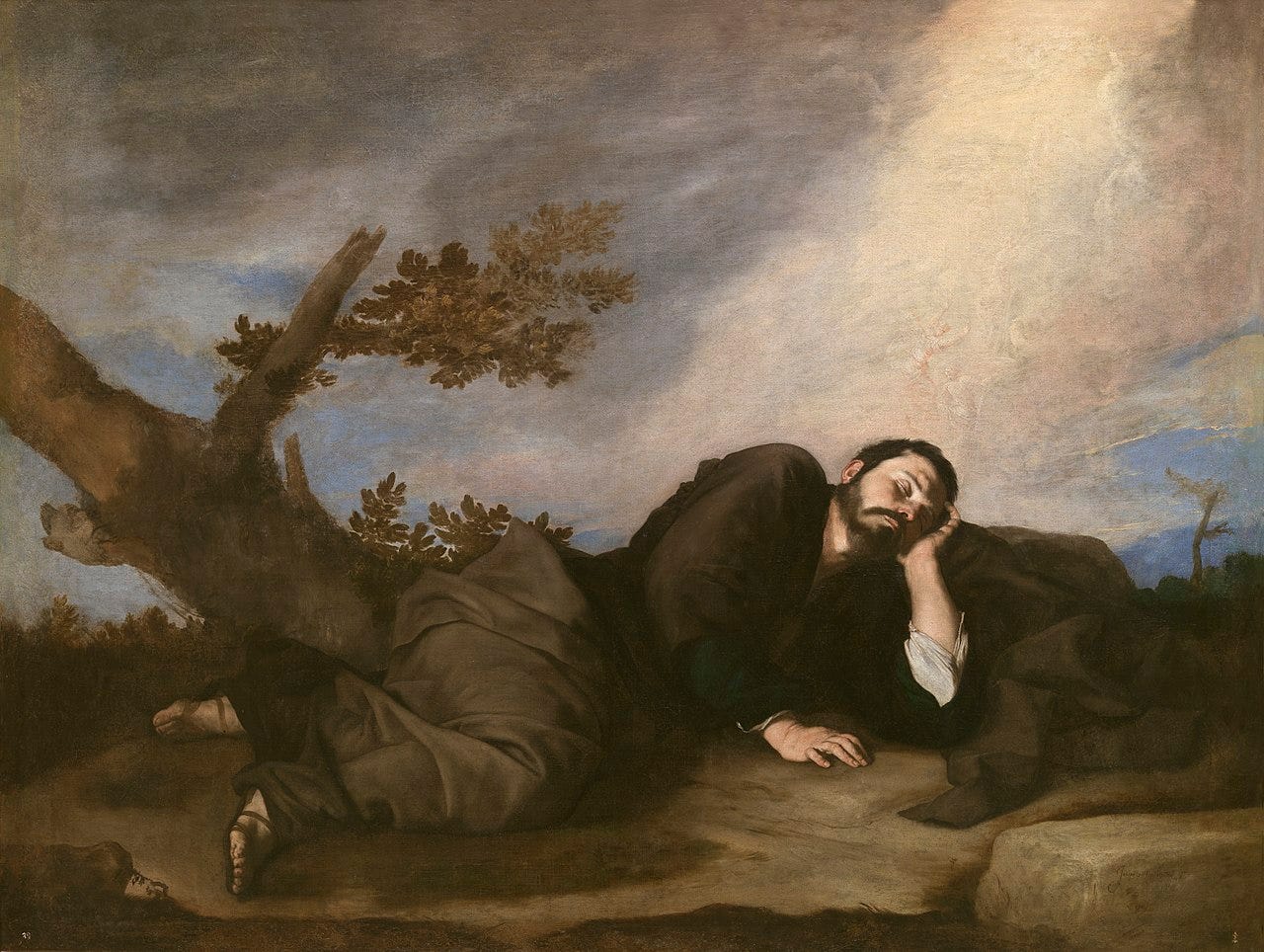
So what are our own closed circles? Among them is digital entertainment. Millions have their attention enslaved by social media and streaming platforms, doped up on entertainment and enslaved to online shopping and the broader market. We’ve long known that what the ex-president of Facebook, Sean Parker, said of social media applies to most of these platforms, that they exploit “a vulnerability in human psychology.” The social medium “literally changes your relationship with society, with each other. It probably interferes with productivity in weird ways. God only knows what it’s doing to our children’s brains.” What will break this circle? Rest from the machine. And a recovery of a spiritual life exercised by Nature, literature, community, and the arts. Hampered by intellectual exhaustion and cultural disassociation, people today are beginning to realize it. Such rest and recovery will nourish our creative output and put us in touch with our own spiritual lives and that of our cultural traditions, which offer so much more than any social medium could.
Reviving the Imagination
The second sign is the revival of the imagination, as something to be activated in reading, writing, and the creation of new art. Grandchildren of the Age of Reason as we are, many people today consider the imagination as something like fantasy or pictures in the mind. But the greatest artists understood it for what it is. In the European Renaissance, Pico de Mirandola considered the imagination to be something that could be harnessed by faith and reason and channeled into artistic creation. For the Renaissance thinkers more generally, this faculty was a bridge between the body and mind and a bridge between the soul and the higher worlds. Ficino saw humanity as a “link” (vinculum mundi) between higher and lower worlds, and the imagination was the faculty that enabled a kind of spiritual ascent and mediation between these realms.
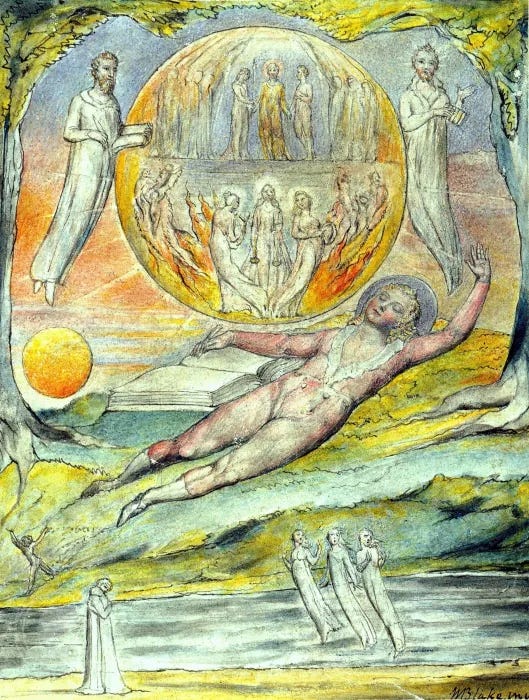
In every renaissance moment to follow, there is a rediscovery of the principle among readers. It happens when readers and artists begin to see themselves as participating in a larger imaginative order, that is, when they cease regarding the imagination as a theoretical, abstract faculty belonging to dead artists and see it as a living, participatory power that authorizes present creation. We see examples of this in Dante, who was on the threshold of the European Renaissance, and who imbued scholastic cosmology with a new visionary life based upon the recovered imagination. The greatest revival of the imagination happened in the Romantic movement with William Blake and Samuel Taylor Coleridge. Blake believed that all humanity is imagination; it was for him the one energy that was shared between humanity and God. Coleridge claimed that it was “the living Power and prime Agent of all human Perception, and as a repetition in the finite mind of the eternal act of creation in the infinite I AM.”
Ralph Waldo Emerson described it as an alembic: that when nature passes through “the alembic of man,” it is distilled into art. Whitman, too, was an alchemist of this art, allowing the spirit of America to pass through him and to distill into his poetry. In the modernist era, the narrative mode of stream of consciousness permitted an aesthetic representation of human thought and experience.
Today the return to the imagination as an active power is beginning in aversion to AI-generated art and an emphasis on human-made value. Although our faculties of the imagination were dulled long before AI came along, it is sufficient to wake us up to the need for real human art, and more than that, an active engagement with the world of the imagination, which is a real world from which the most enduring art and social harmony has come.
Opening the Doors of Art
The third sign signals an understanding of art as a window and a threshold into deeper ways of seeing. Many of us, including the generations being raised on smartphones, have our sense of beauty trained by passive consumption of digital media. When a painting or a work of literature is placed before a young person today, many expect to receive enjoyment from the art without any intellectual or spiritual effort of engagement. Art is interactive. It requires participation.
C.S. Peirce wrote that: “In contemplating a painting, there is a moment when we lose the consciousness that it is not the thing, the distinction of the real copy disappears, and it is for the moment a pure dream—not any particular existence, and yet not general. At that moment we are contemplating an icon.” By icon, he means an image that becomes a window into the world of the imagination. Books and poems are like this too.
People are already waking up to this reality and rediscovering that, if you place yourself within the presence of art for several minutes, and you seek to enter into it on its own terms, it will yield the treasures of beauty and wisdom that are not to be found in much entertainment today. All renaissance moments have a rediscovery of art of some kind. But the New Renaissance will begin by resetting the conditions of enjoyment established by the passive consumption of digital media by exercising a meditative, dialogic, contemplative—in a word, active—engagement with art. Consumers will become pilgrims and creators.
The Alchemy of Language
The fourth sign of a renaissance is the awareness of the generative power of language to shape reality. Many have mused on the consciousness-altering power of language, from the Kena Upanishad, Aristotle’s Poetics, Maximus the Confessor’s theories of the Logos and logoi to Alan Moore’s more recent esoteric musings. Renaissance moments bring with them a new attention to language and its ability to transform consciousness collectively.
After all, it was the European Renaissance that reintroduced an attention to style and prepared the way for the genius of Montaigne, Sidney, Spenser, and Shakespeare. The Romantics brought the language of poetry nearer to the language of common life, and they charged it with a new spiritual vitality that sometimes rivaled the poetic power of the Hebrew prophets. And just as the modernist style was a response to the insufficiency of inherited forms to represent human experience, the New Renaissance begins with an awareness of limitations of generative AI. Even among those who had never considered language, an awareness of style, thanks to generative AI, has increased. We are becoming aware of style again. This awareness could be the first spark of interest to fan into flame a renewed understanding of language and its power for shaping human consciousness and directing the energies of entire nations toward beauty and justice.
Re-enchantment as Recovery of Reality
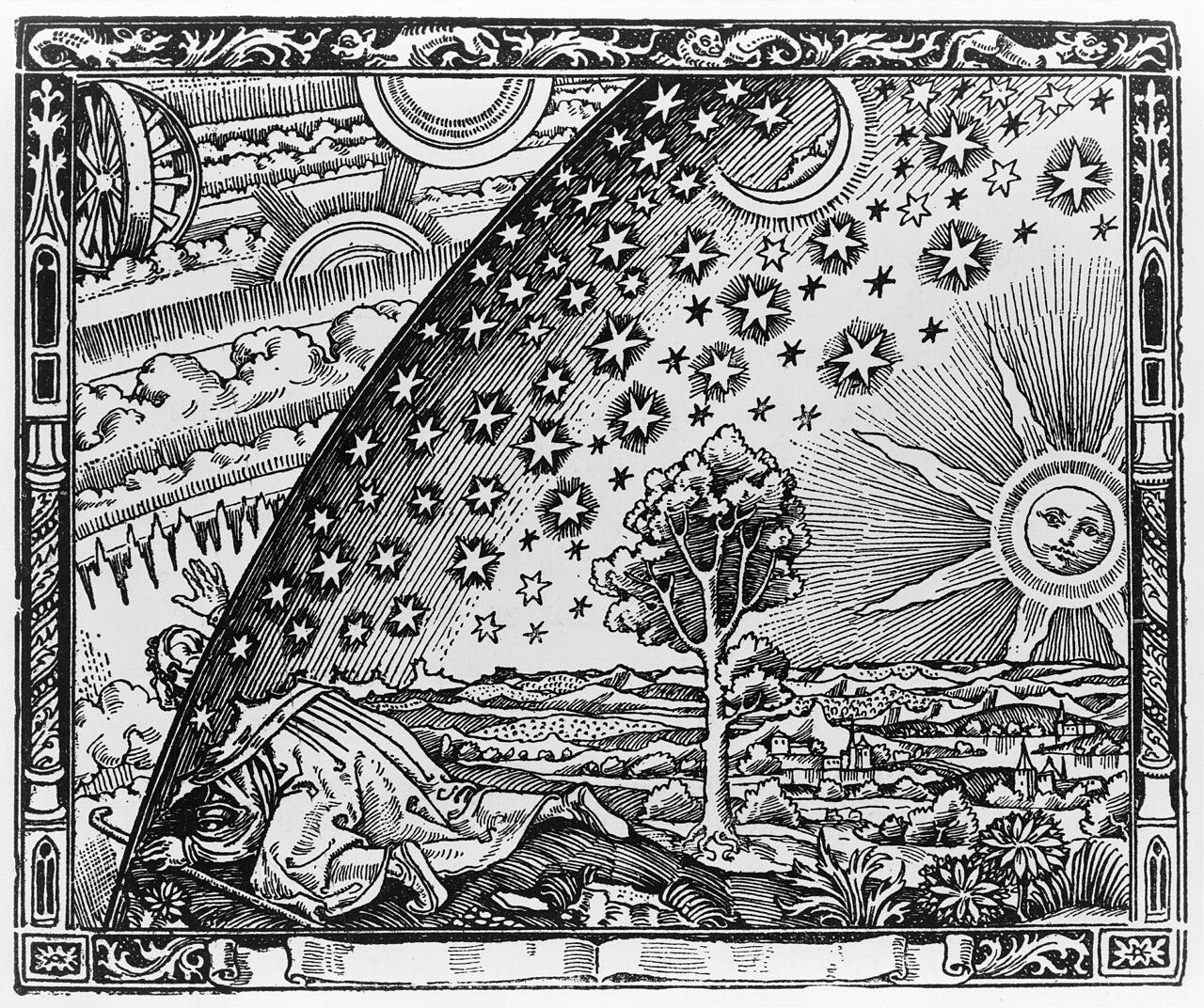
The fifth signals a re-enchantment of the world. This sign is perhaps the most conspicuous aspect of a renaissance moment. Re-enchantment happens when a culture experiences through new forms of art a state of consciousness in response to beauty. Like all enchantments, there are those evil and good, the breaking of spells and the casting of spells. Some toxic forms of enchantment we see today are of course to be found in conspiracy theories and flat-earthism. Right enchantment draws us not further away from truth but nearer to reality. This kind of enchantment is experienced psychologically as the tremendous feeling of awe, wonder, inspiration (the word tremendous carries much freight here, including its Latin root, tremere, “to tremble”; Rudolf von Otto’s concept of mysterium tremendum et fascinans, the “tremendous and fascinating mystery”; along with Elizabeth Bishop’s brilliantly considered use of the word in “The Fish”).
More broadly, collective re-enchantment brings a greater awareness of a deeper spiritual reality within Nature (this involves what Shelley in his A Defense of Poetry called the “diviner manner” of poetry: “It awakens and enlarges the mind itself by rendering it the receptacle of a thousand unapprehended combinations of thought. Poetry lifts the veil from the hidden beauty of the world, and makes familiar objects be as if they were not familiar”). For us today, recovering this sense of enchantment is the fundamental requisite to addressing the ecological crises of the coming years by re-orienting ourselves to the world of nature through art, an encounter with beauty that leads to greater love for the earth, the self, and others. It also transforms the objects of daily life into heavenly visions (see Shklovsky’s concept of “defamiliarization” The Art of Technique). Every great artistic movement in history has performed this work. Re-enchantment breaks the spell of habit, and allows us to see the world as it really is, bright and luminous, and full of meaning.
A Renewed Relationship to the Divine
The sixth sign necessarily flows from the fifth and involves a reimagined relationship with the divine. In past renaissance moments, this sign often first emerges as a resistance to religious fundamentalism (when metaphor breaks down into literalism) and then progresses from contra-distinction to autonomy by coming into its own relationship through culture, art, and literature.
The spiritual life of a culture is directly related to its artistic life.
Reading the medieval Christian mystics, one will find in their works many varied, strange, sometimes seemingly irreverent, metaphors that alter the way one sees themselves in relation to God. The Song of Songs is a love song between two humans, but is often interpreted allegorically by the Jewish Kabbalists as a love song between God and humanity. Rumi, the great Persian poet and Sufi mystic sings love poetry to God. There’s that beautiful passage from the Śrīmad-Bhāgavatam, in which the brāhmaṇa addresses the soul:
“My dear friend, even though you cannot immediately recognize Me, can’t you remember that in the past you had a very intimate friend? Unfortunately, you gave up My company and accepted a position as enjoyer of this material world. My dear gentle friend, both you and I are exactly like two swans. We live together in the same heart, which is just like the Mānasa Lake. Although we have been living together for many thousands of years, we are still far away from our original home.”
The world today is already re-enchanting with the rising interest in esotericism, mysticism, alternative spiritualities, and conspiracy theories—and I think all of these, whether good and ill, are symptomatic of the loss of real aesthetic and spiritual engagement in our culture. If we recognize these signs and correctly treat them, readers of the New Renaissance will be encouraged to see art as spiritual practice and literature as a conversation with the divine. During such times, the imagination (and its product, art and communion) become ways to communicate with the divine. And every renaissance in the past has reinvigorated art and daily life as forms of spiritual communication.
Lineage and the Collective Talent
Finally, the last sign is the emergence of a new relationship with past art. Every renaissance moment heralded a new, collective orientation to past traditions through the discovery of forgotten texts. The European Renaissance was as much a rejuvenation and rejection of the tradition of stale scholasticism as it was the conscious adoption of the tradition of Platonism. Just as the European Renaissance was brought about by the discovery of lost Platonic texts, the new renaissance may be brought about by the discovery of forgotten context.
Among readers today, there is a growing return to the classics and to the traditions of great literature. We are already correcting the cultural amnesia of our times by rediscovering our artistic roots in Homer, Shakespeare, Milton, Dickinson, Woolf. And readers are beginning to consciously select their own lineage from these traditions. For the Romantics, it was the rejection of the neo-classical tradition and the adoption of Milton and Shakespeare as their models. For the American Renaissance writers, it meant giving themselves permission to reject the British standard of poetry and the freedom to invent their own new forms. And at the same time, this new interest corresponds to a new interest in these forms that signal a reorientation and not simply a hunger for information. Although many are disconnected from our artistic inheritance, the roots of traditions, the sign of recovery is emerging.
Spring rain may quicken the dull roots.