
The New Renaissance and the Spiral
the renaissance spiral, and the cosmic Sabbath

While looking through some of my old journals, I came across an entry from my undergraduate years at the University of Florida.
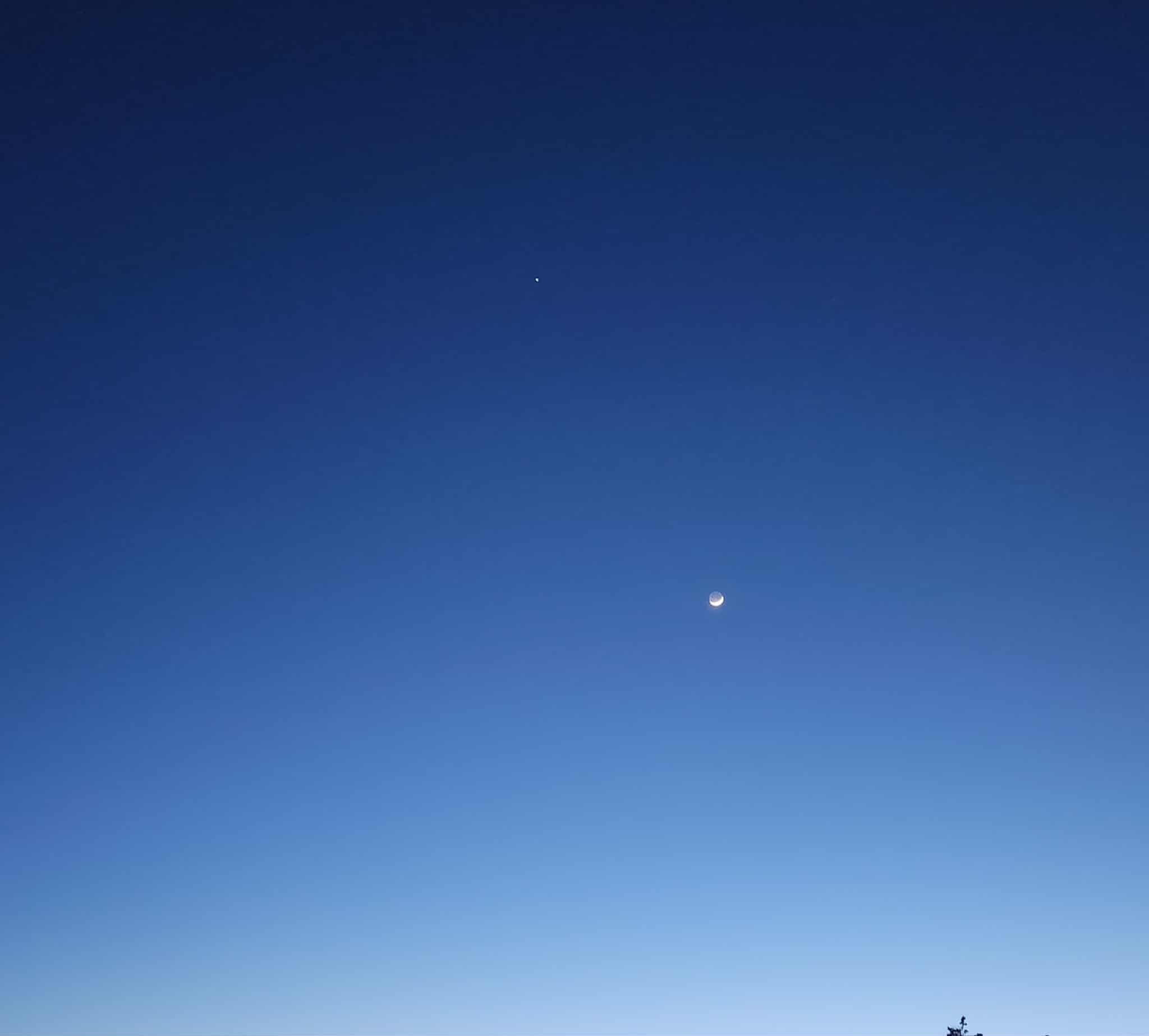
It was early fall 2015. The sun had just set, and the cicadas were singing in the twilight. I was hurrying across campus late for a meeting. As I crossed the green outside University Auditorium, I looked up. Above the darkening silhouettes of the swamp pines standing motionless against the sky, I saw one star. It was Venus floating in a deep lavender just above a still-burning glow in the west.
The beauty had filled me with a pang of longing, which I immediately attempted to suppress. The star above the standing pines suddenly became inconvenient. If I lingered any longer, the meeting would begin without me. I would shuffle in late. If only this star had appeared to me on my way home, I would have had time to stop!
Later that evening, I had recorded that moment in my journal. It disturbed me how, almost instinctively, I had hardened my heart against the beautiful and attempted to hurry myself along.
Small and insignificant as it may seem, that moment under the star and pine trees revealed how easily ensnared I could become within the shrinking orbit of my own routine. It revealed that I had been trapped inside a closed circle. And I didn’t even know it.
Breaking the Closed Circle
Many people are trapped within such circles. They move along the narrow orbits of obligation, consumerism, ambition, and entertainment. For much of my life, mine had been the circuit of academic approval. Four months outside of the academy, I still haven’t broken totally free from that pull.
There is a desperate comfort in resigning oneself to an unconscious cycle, a “repetition compulsion” perhaps linked to what Freud called the death-drive. Henry David Thoreau had called it simply “desperation,” a surrendering to despair underlying the duty and entertainments of daily life. In Walden he writes:
“The mass of men lead lives of quiet desperation. What is called resignation is confirmed desperation. From the desperate city you go into the desperate country, and have to console yourself with the bravery of minks and muskrats. A stereotyped but unconscious despair is concealed even under what are called the games and amusements of mankind. There is no play in them, for this comes after work. But it is a characteristic of wisdom not to do desperate things.”
Thoreau’s life can be seen as a series of successful experiments to break himself from the closed circles of Concord and the larger New-England society. His abolitionism, education theory, explorations into Maine and on Cape Cod, his studies of nature, his two years at Walden Pond are several among many of his experiments. Thoreau knew that, within closed circles, a life will run its unconscious course around a fixed point until it expires.
But the image of the “closed circle” is not from Thoreau. I borrow it from Valentin Tomberg, the Estonian Catholic mystic who described the closed circle as a kind of prison. In his Meditations on the Tarot (translated by Robert A. Powell), he puts forth a parabolic retelling of the cosmic myth of the fall:
“The open circle —or the spiral —is the world before the Fall of the six days of creation crowned by the seventh day, the cosmic sabbath, which corresponds to what one designates in mathematics as the ‘step of the spiral.’ It suggests the idea of unlimited growth and advancement, being through its form only the introduction or antechamber to eternity. It promises unlimited progress. The closed circle, in contrast, is in principle only a prison, whatever its extent may be. It is a wheel which turns on itself and therefore suggests no advancement beyond its circle. The idea that the closed circle—or wheel—suggests, is that of eternal repetition.” (240-1).
In other words, the open spiral is the emblem of the garden. The closed circle is the emblem of the world-city.1
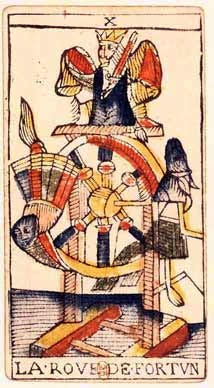
On a cosmic level, the closed circle is the condition of the fall. On an individual level, the closed circle is what the theologians have described as hell, the confinement of the soul within itself that cannot reach out, cannot be vulnerable, cannot be touched, cannot love.
Rainer Maria Rilke’s “The Panther,” written during his Paris years (1902–1903), is a picture of that condition:
     THE PANTHER
     In the Jardin des Plantes, Paris
     His vision, from the constantly passing bars,
     has grown so weary that it cannot hold
     anything else. It seems to him there are
     a thousand bars; and behind the bars, no world.

     As he paces in cramped circles, over and over,
     the movement of his powerful soft strides
     is like a ritual dance around a center
     in which a mighty will stands paralyzed.

     Only at times, the curtain of the pupils
     lifts, quietly—. An image enters in,
     rushes down through the tensed, arrested muscles,
     plunges into the heart and is gone.
			    (tr. Stephen Mitchell)
Rilke’s panther is literally about an animal caged by human beings, true. But it also serves as an emblem of the human life bound in the “cramped circles” of a life void of spirit.
Your spirit is always running, always changing. It spins in an orbit around your daily life. And what many do not realize is that the world is constantly trying to narrow that orbit. The world includes the forces of materialism, ideology, individualism, consumerism, and entertainment—a force that wants to narrow that orbit and to enslave your spirit to its own interests. The lie of the world is that your spiritual desires can be satisfied by more purchases, by media and entertainment. But like Rilke’s panther, there is inside of us a powerful focal point that intuits the lie.
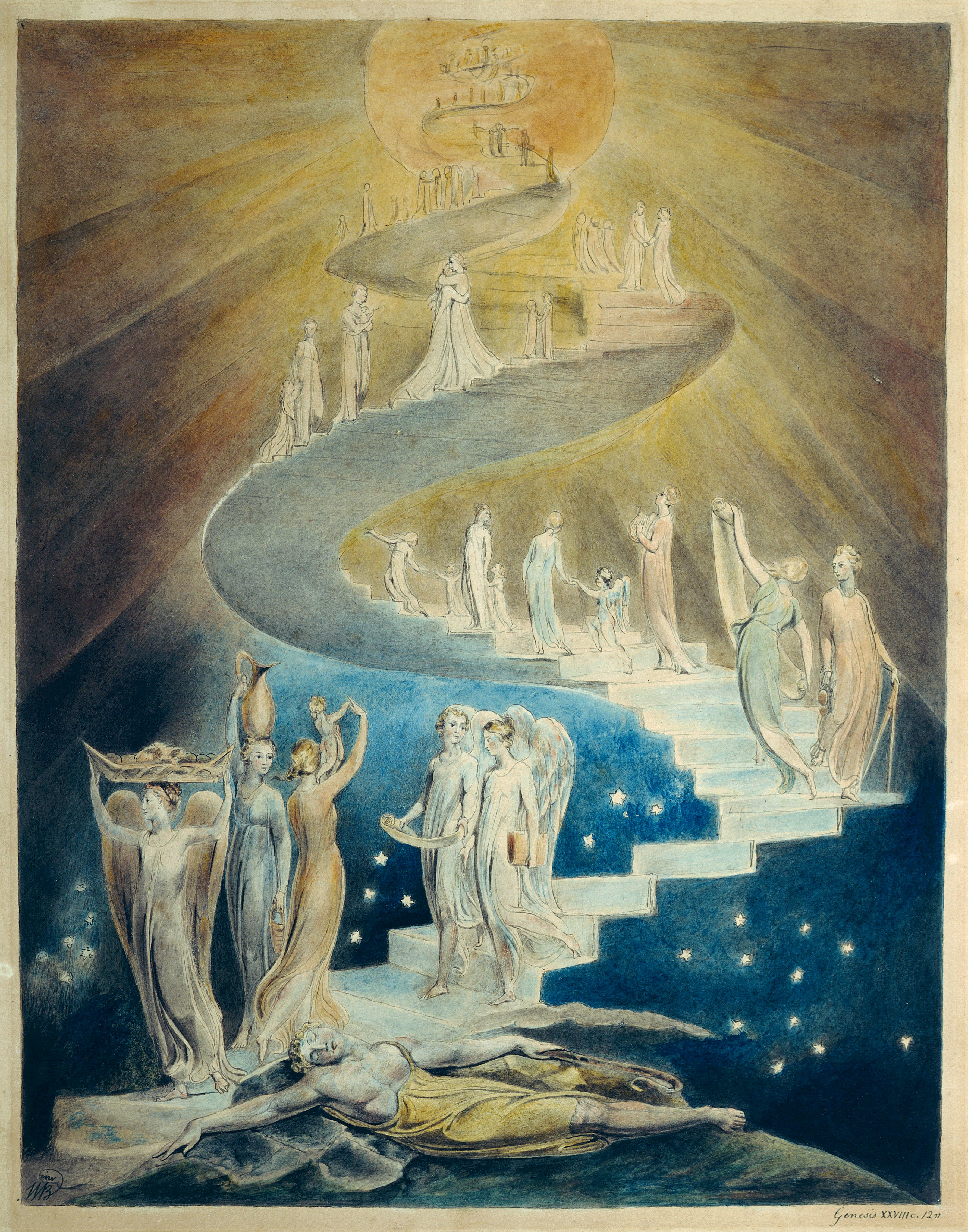
Every now and then, we can encounter something that widens our radius, that breaks open the circle, that transforms it from a two-dimensional circular enclosure to a three-dimensional ascending spiral, when we are acted upon by something higher and our spirits are lifted out by another gravitational field; when we become aware of forces greater and more important than the ones that seek to control us. For a brief moment, we break free from the endless circle. Sometimes we break free forever.
This is what theologians call a conversion. In moments like these, we become ourselves. Our transformation begins to widen according to our own spirits. It’s the swinging wide of a prison door. It’s like the moment when a seedling breaks free from the shell of an acorn and begins to grow according to its true-self, moving ever closer toward the oak tree it will one day become and already contains within.
The Renaissance Spiral
I’ve been writing about the prospect of the next renaissance and what it would take for this renaissance to happen. Recently I argued that it would take a revival of the spirit, a reorientation of ourselves in relationship to the world and creativity. All the renaissances and literary revivals over the past 700 years are inspired by a renewed understanding of the spirit, a breaking open of closed circles.
What is a renaissance other than a moment when a culture’s two-dimensional circle violently breaks open into the three-dimensional ascending spiral, when the enslaving enclosure of the world is overpowered by a vitally creative gravitational field?
In upcoming essays, I’ll further elaborate on these opportunities. But for now, it is enough to say that each of these will require openness and receptivity. We must be willing to have our closed circles broken.
Emily Dickinson put it this way:
     The Soul should always stand ajar
     That if the Heaven inquire
     He will not be obliged to wait
     Or shy of troubling Her

     Depart, before the Host have slid
     The Bolt unto the Door --
     To search for the accomplished Guest,
     Her Visitor, no more –
		(F1017; J1055)
Consider how inconvenient it is to keep an open door. Heaven will not honor the clock (much less your schedule), so you must be willing to entertain angels at all times. But Heaven will call, sometimes at the most inconvenient times.
Breaking the circle may also involve you breaking your routine to place yourself within the presence of beauty and art. Walking around an art museum works for this, as Rilke knew. In a letter to Lou Andreas-Salomé, Rilke described how the fragments of art in museums will sometimes call to us, unexpectedly, even though they previously remained unnoticed:
The little tiger at Rodin’s is like that, and the many fragments and broken pieces in the museums (which you pass by many times without paying attention, until one day one of them reveals itself to you, and shines like a first star . . . )”2
The one who would live the life of the ascending spiral needs must maintain a careful receptivity. We must have what Wordsworth called “a heart that watches and receives.” When your days are filling up with emails, phone calls, paperwork, and meetings, stop. Make sure your door is ajar. We must not give Heaven any reason to depart before it blesses us.
The life of the spiral acknowledges that daily life is intimately bound up with spiritual life. The two lives are inextricable, and human life should be more “porous” to the common graces of nature.
That the life of the ascending spiral is so counter-cultural to our moment makes it all the more important. If the next renaissance is going to happen, our lives must move according to the ascending spiral. The next renaissance will require a spiritual vitality powerful enough to combat the opioids of entertainment and the ills of consumerism and philosophical materialism. It will require artists and readers to imagine a new orientation to the traditions of literature. It will require us to rediscover the inheritance of the Romantic movements, specifically the power of the imagination. It will ask that we see art and literature as icons or as thresholds into other worlds. It will require more than just an academic understanding of culture. It will require a new form of study that makes new creation permissible.
That evening at the University of Florida, I arrived late to my meeting. The pines and the star remain with me to this day.
In Tomberg’s cosmic myth, the “ cosmic Sabbath” is the opening of the spiral:
“Thus it was that the circle of movement of the world was not closed, but remained open. And the seventh day was sanctified and blessed as the open part of the circle of movement of the world, in such a way that the beings of the world had access to the Father and the Father had access to them.
But the serpent said: There is no freedom for the world, in so far as the circle of the world is not closed. Because freedom is to be in oneself, without interference from outside, especially from above, on the part of the Father. The world will always follow the will of the Father, and not its own, in so far as there is an opening in the circle of the world, in so far as the sabbath exists.
And the serpent took his tail in his mouth and thus formed a closed circle. He turned himself with great force and thus created in the world the great swirl which caught hold of Adam and Eve. And the other beings, upon whom Adam had impressed the names that he gave them, followed them. And the serpent said to the beings of the world moving on this side of the closed circle, that he formed by taking his tail in his mouth and setting himself in rotation: Here is your way — you will commence by my tail and you will arrive at my head. Then you will have traversed the length of the circle of my being and you will have within you the entire closed circle, and thus you will be free as I am free. But the woman guarded the memory of the world opened towards the Father and the holy sabbath. And she offered herself for the rending of the closed circle in herself in order to give birth to children issuing from the world beyond it, from the world where there is the sabbath. Thus originated the suffering of her pregnancy, and thus originated sorrow on this side of the world of the serpent. (Meditations on the Tarot, 239).
Rilke to Lou Andreas-Salomé, August 15, 1903; quoted from The Selected Poetry of Rainer Maria Rilke, ed. And tr, Stephen Mitchell, p. 303.
I love how many voices in various streams of humanity are all speaking now about this renaissance. They all have different words for it—renewal, awakening, revival (though some who use this word are talking about something very different, and regressive). In my own writing, I call this renaissance the Neo Axial Age, as I believe it will be a time of generative reordering of many of the belief structures that form the foundations of our dominant worldviews. We need a new way of being human together, after all, if we are to survive. Or thrive. Writings like this one, though, are helping us find the way. Thank you.
Thanks for your recognition of what I call the mystical moment. I believe we all have them, that door opening, that invitation. I also believe most people make a note, move on and quickly forget.
Of all your cites, I don't think anyone said it better than Walt Whitman in his poem, "When I Heard the Learn’d Astronomer."
When I heard the learn’d astronomer,
When the proofs, the figures, were ranged in columns before me,
When I was shown the charts and diagrams, to add, divide, and measure them,
When I sitting heard the astronomer where he lectured with much applause in the lecture-room,
How soon unaccountable I became tired and sick,
Till rising and gliding out I wander’d off by myself,
In the mystical moist night-air, and from time to time,
Look’d up in perfect silence at the stars.